Assembley House
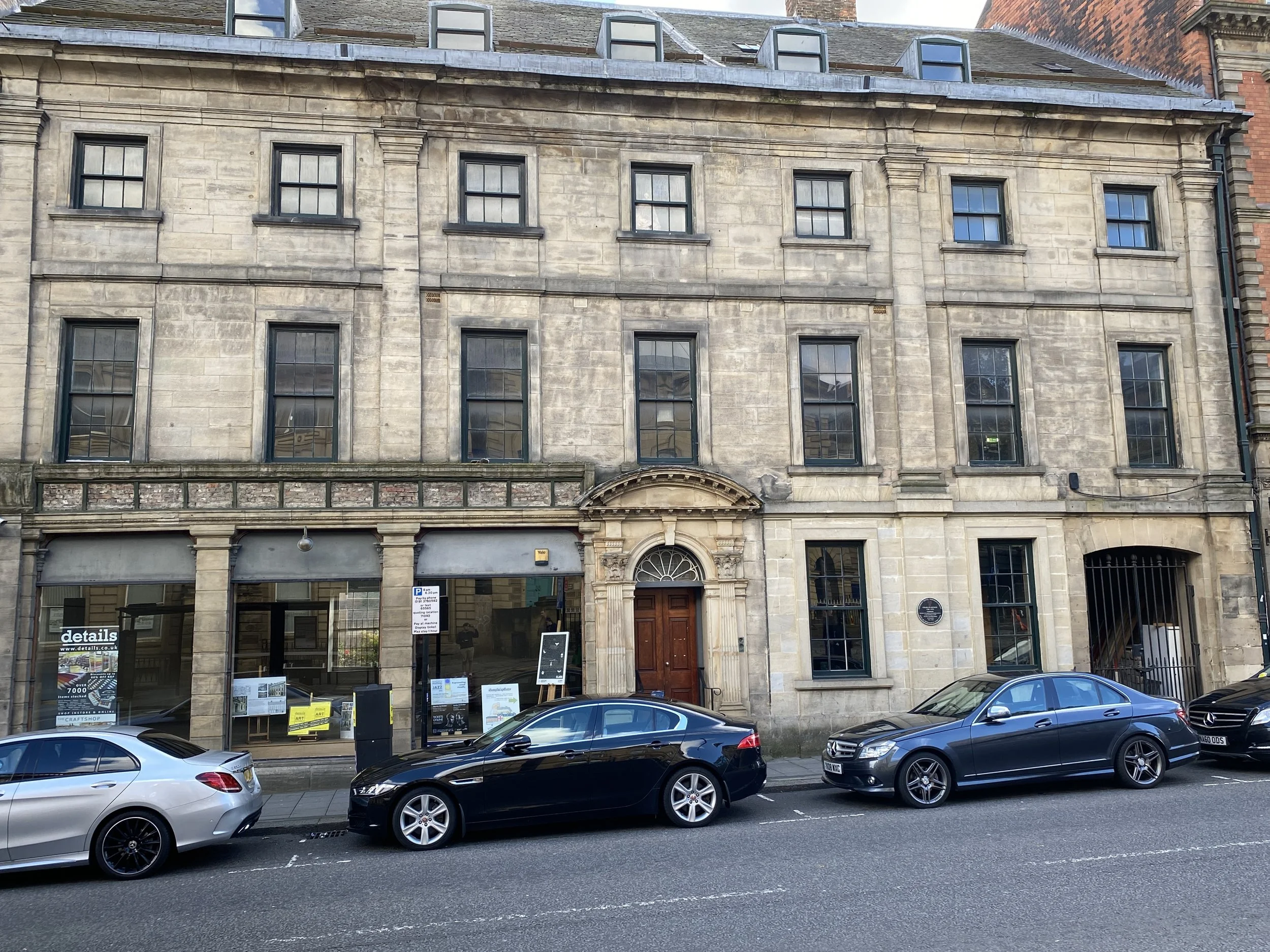
55-57 Westgate Road, Newcastle, NE1 1SG
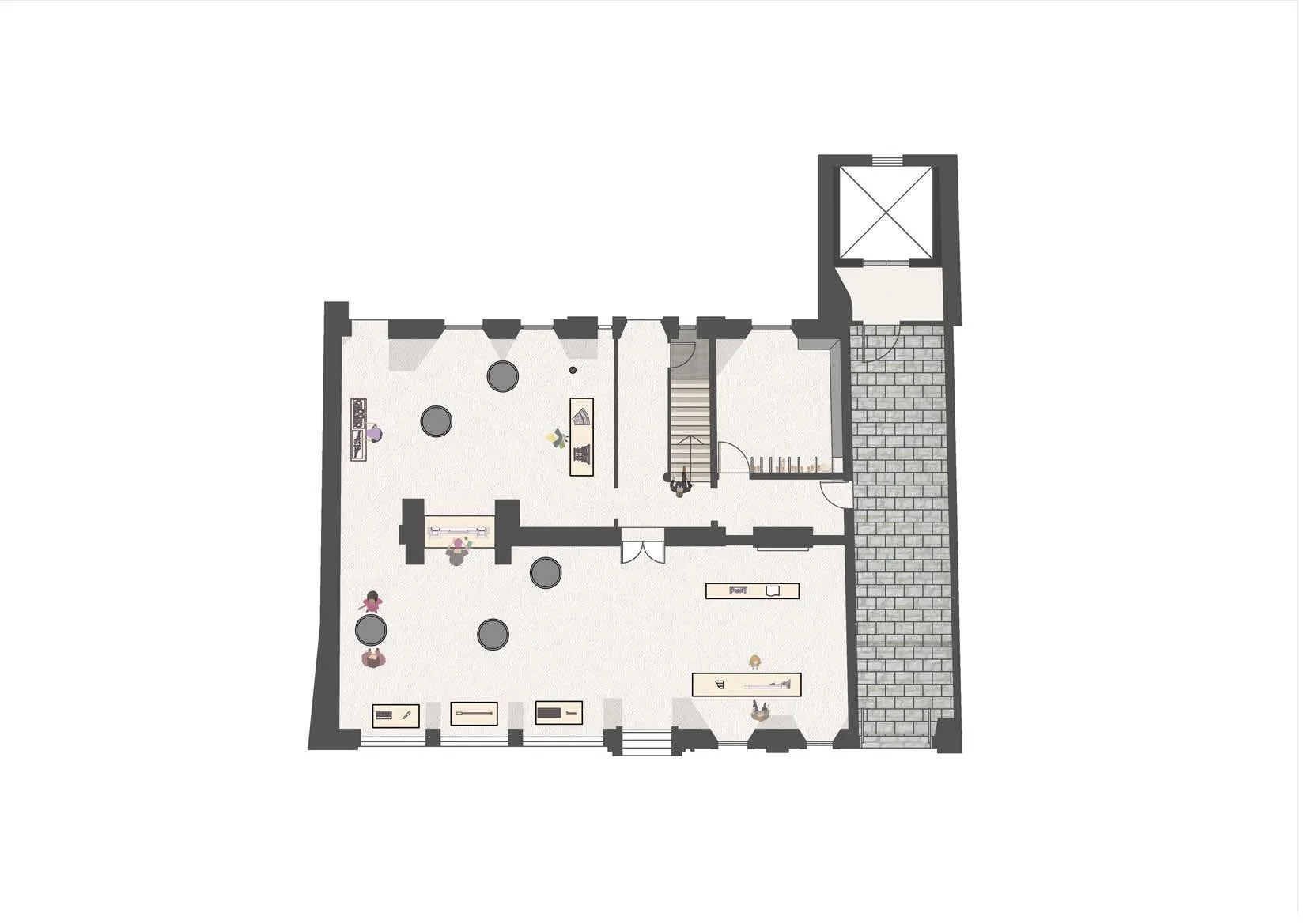
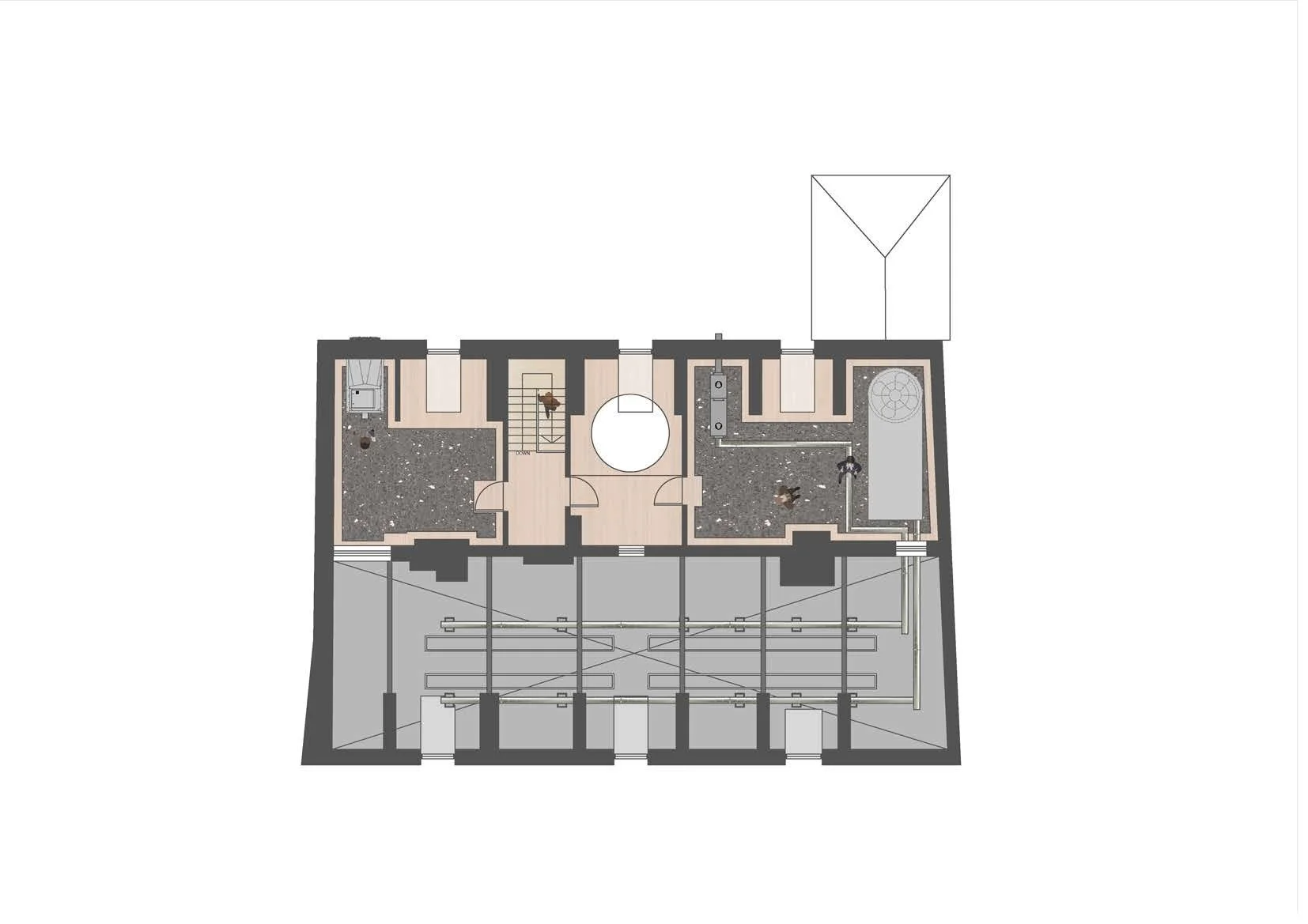
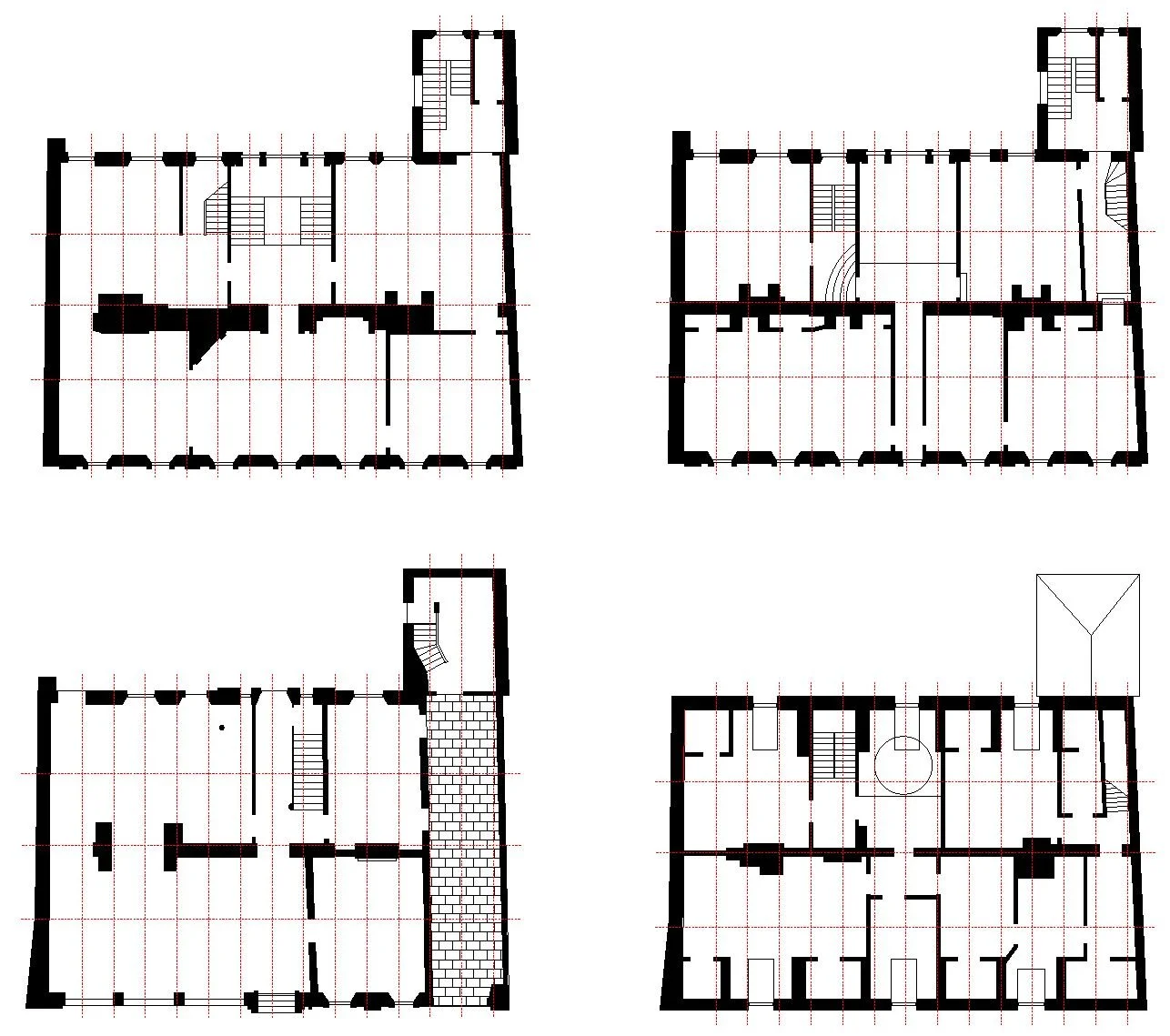
This project was the first brief of final year. The building is Grade II* Listed and consisted of multiple floors. Due to the listed status of the building, it presented new and complicated challenges due to there being parts of the building we were not allowed to move or remove, such as exterior shell, but more specifically the grand imperialistic staircase at the back centre of the building.
Assembly House, Initial phases.
Site and Surrounding Area Research.
As with any new project, the first weeks are about gathering information to gain knowledge about the site and surrounding area. This is to create a platform from which later designs and decisions can be made. It is also to inform about the circulation of the existing space, access to site and sun patterns around the site. From this, the initial ideas phase can start and design strategies can be formed.
Initial Ideas Phase.
At the start of the initial ideas phase, we were tasked with designing a scheme which had the heritage of the site at the forefront of each decision and how we, the designer, could convey that to visitors. With the Grade II* listing on certain parts of the interior, designs had to have a level of cohesion between the older structure of the building, along with the elegant imperialistic detail and the newer, more modern insertions. During this phase, the scheme started to become about to adapt to the restrictions of the building but also the older craft processes and how visitors can learn about them but also potentially try them.
Final Outcome.
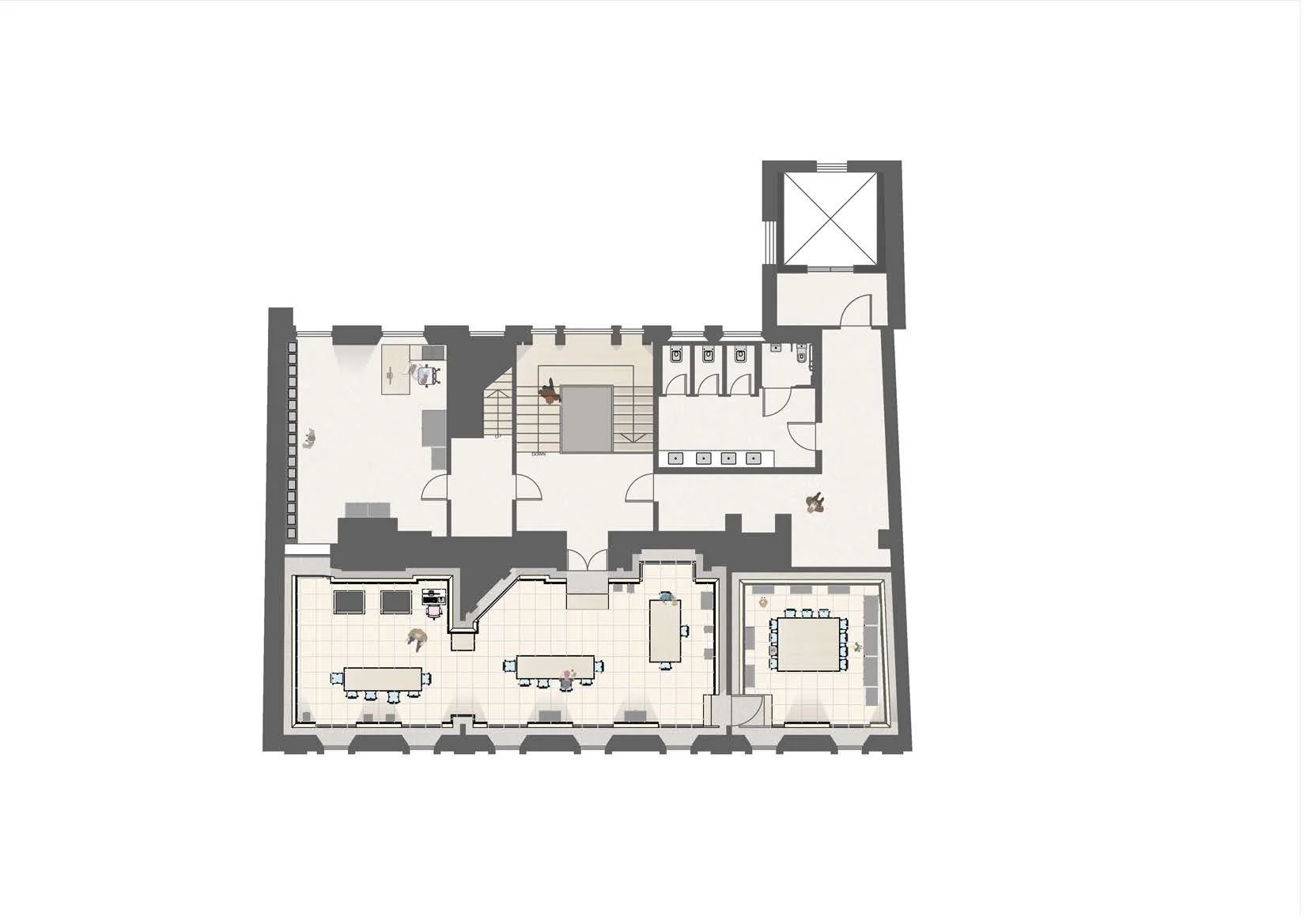
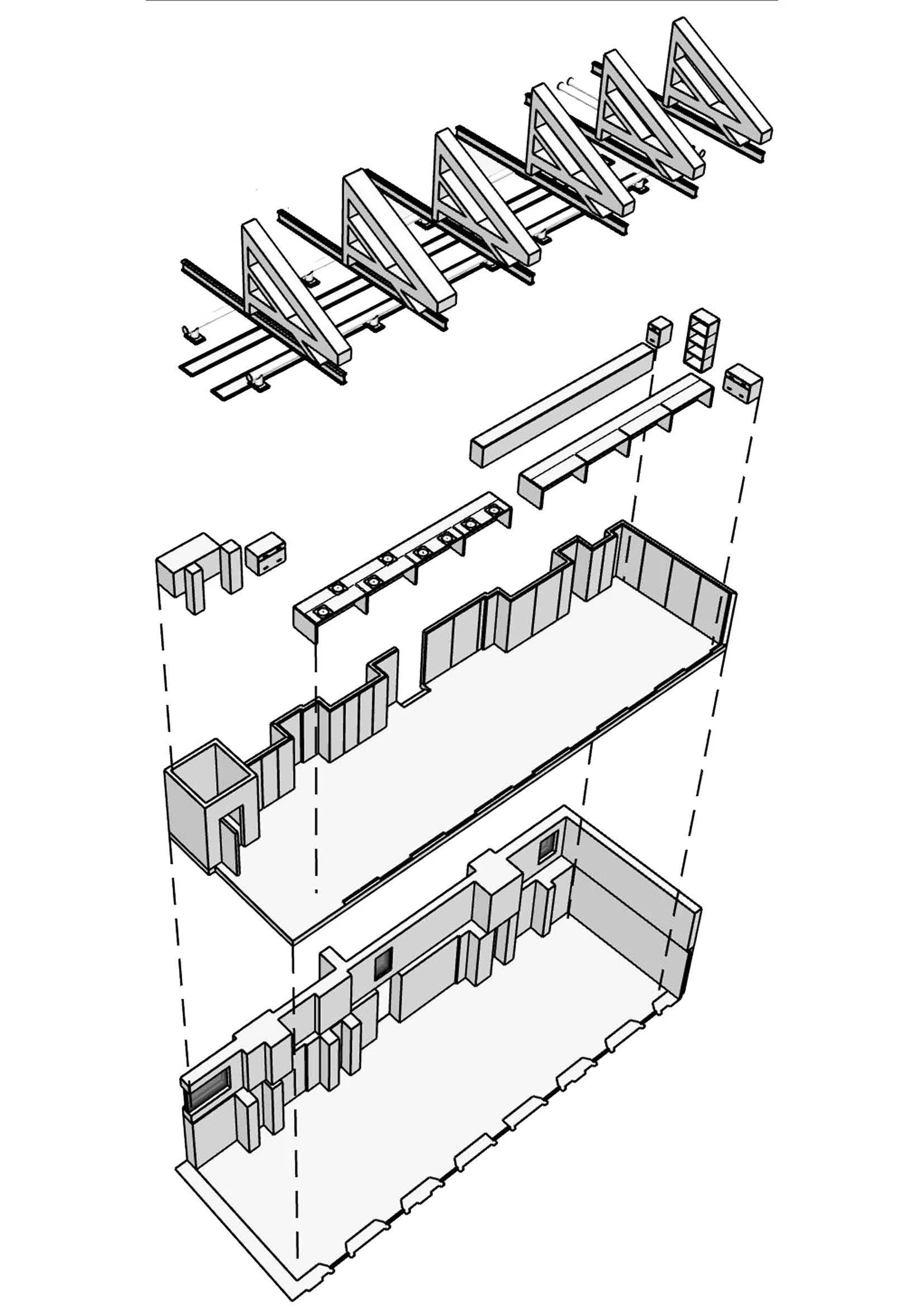
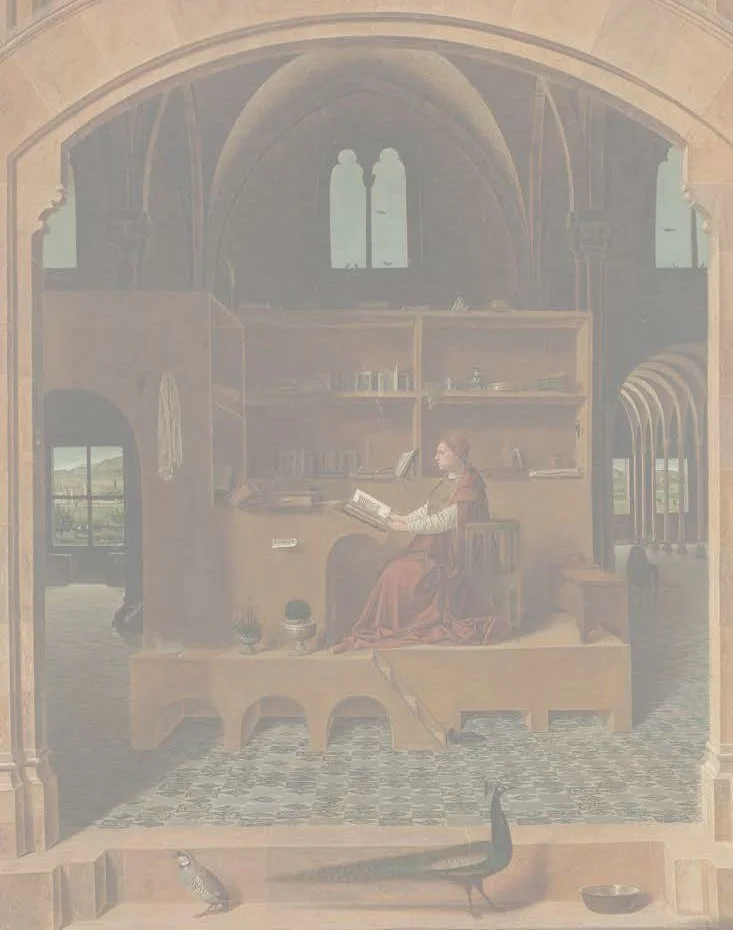
After creating a scheme that had heritage throughout the spaces, it was time to finalise the design for the insertions Precedents like Saint Jerome in his study were used to show how a traditonal style insertion can impact a space without diminishing the details. From this, a modular timber insertion was created which influenced the learning of craft processes but also provided a space for visitors to have a go at learning tradition crafts.
Assembly House, Development.
Development.
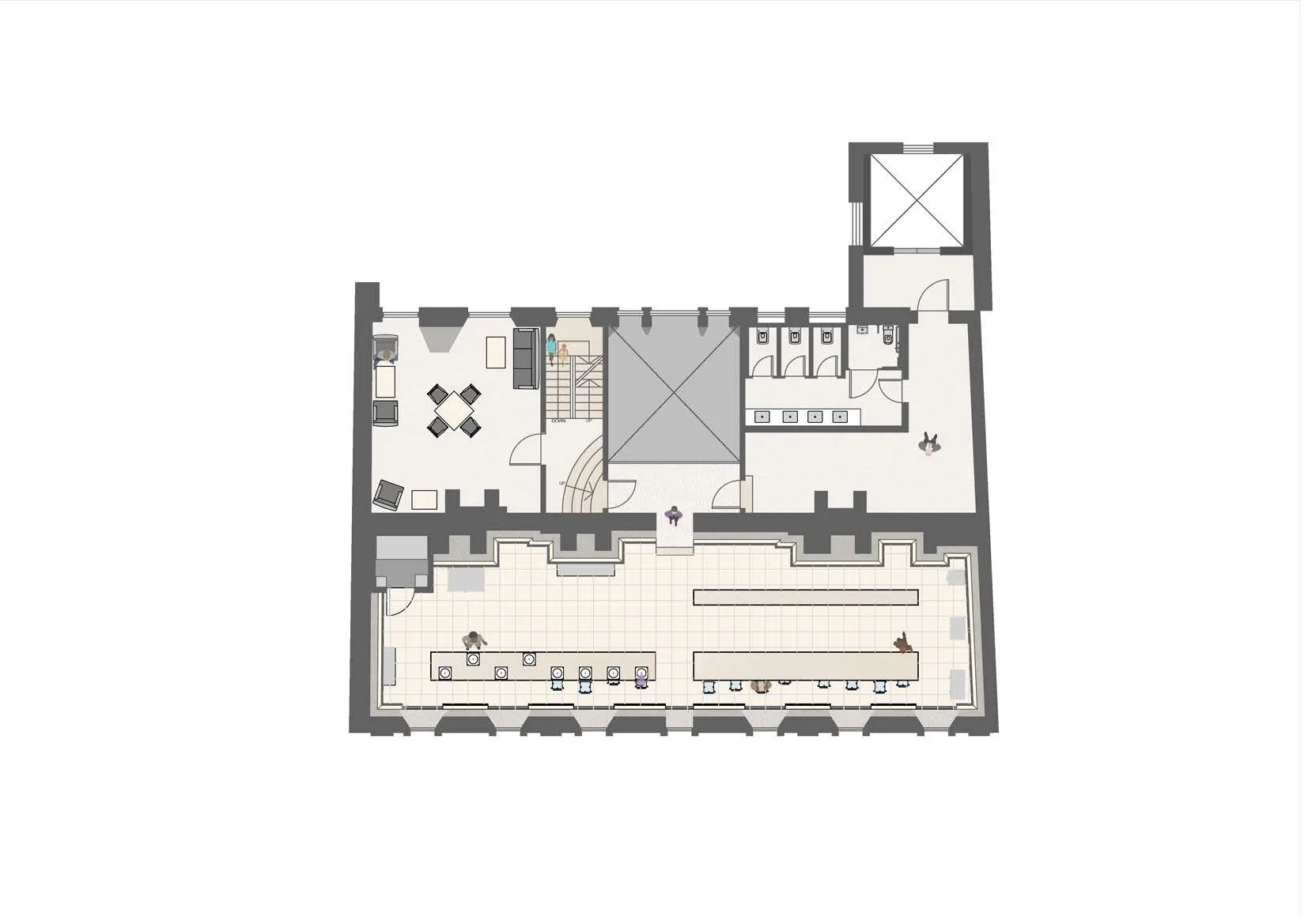
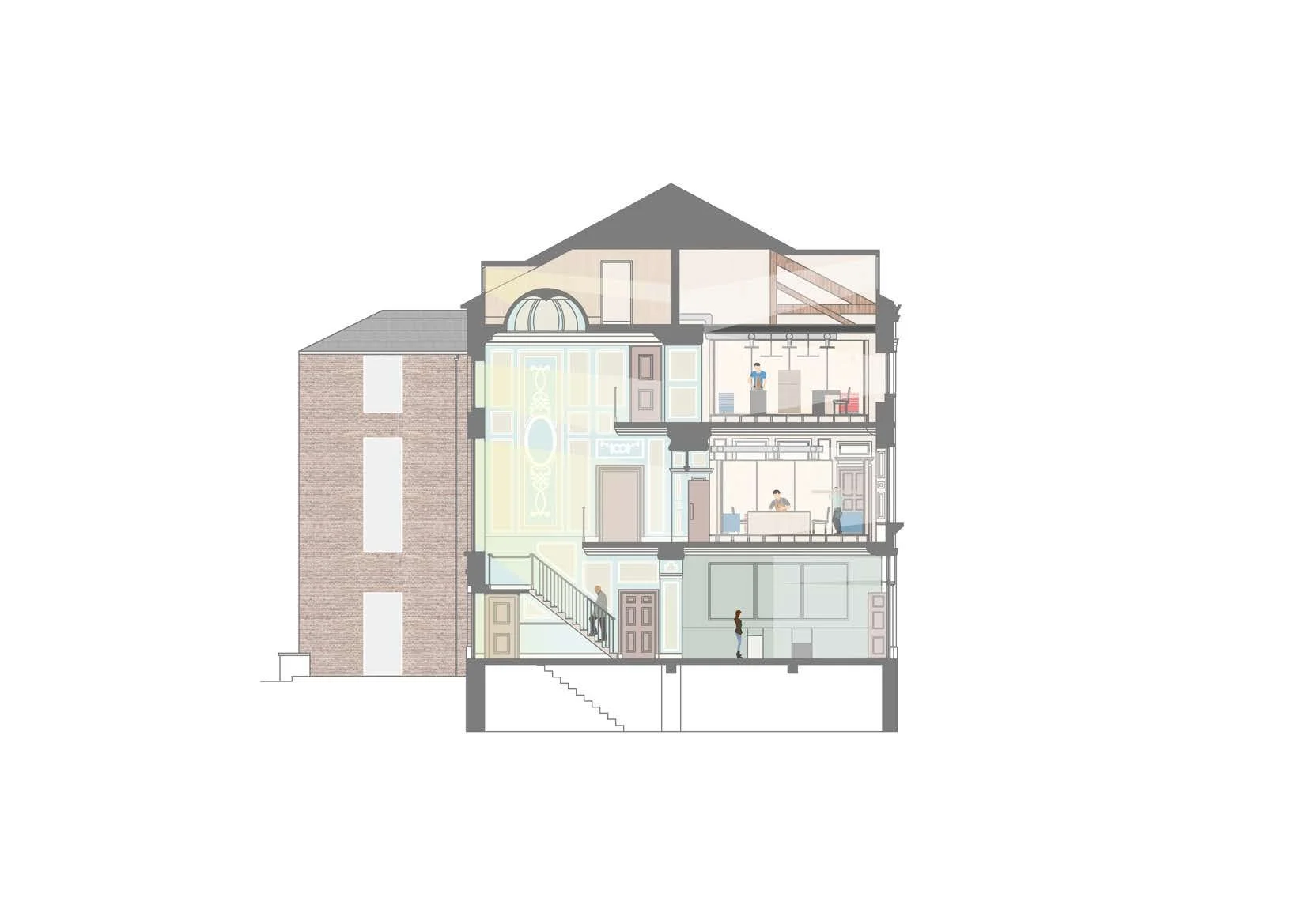
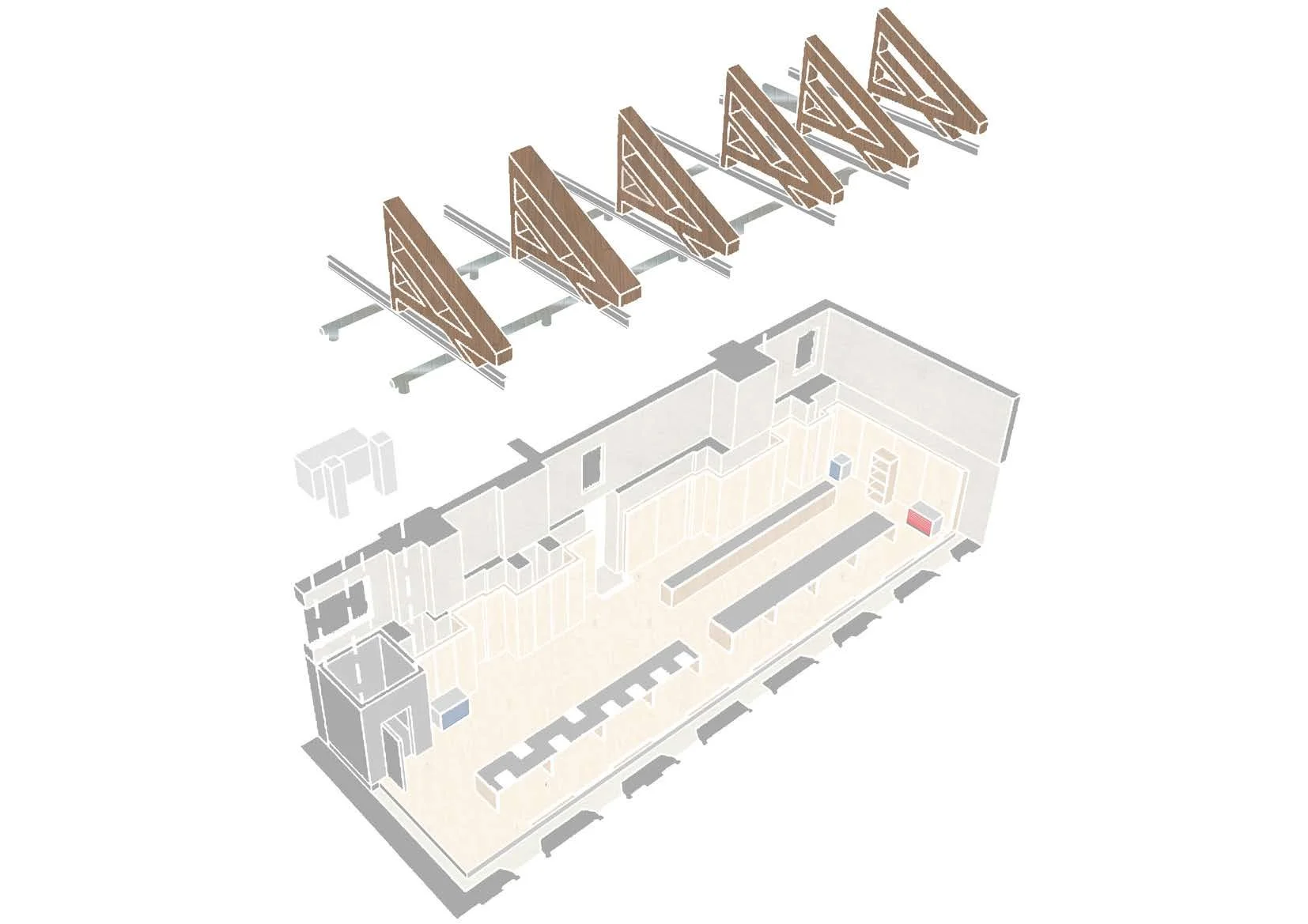
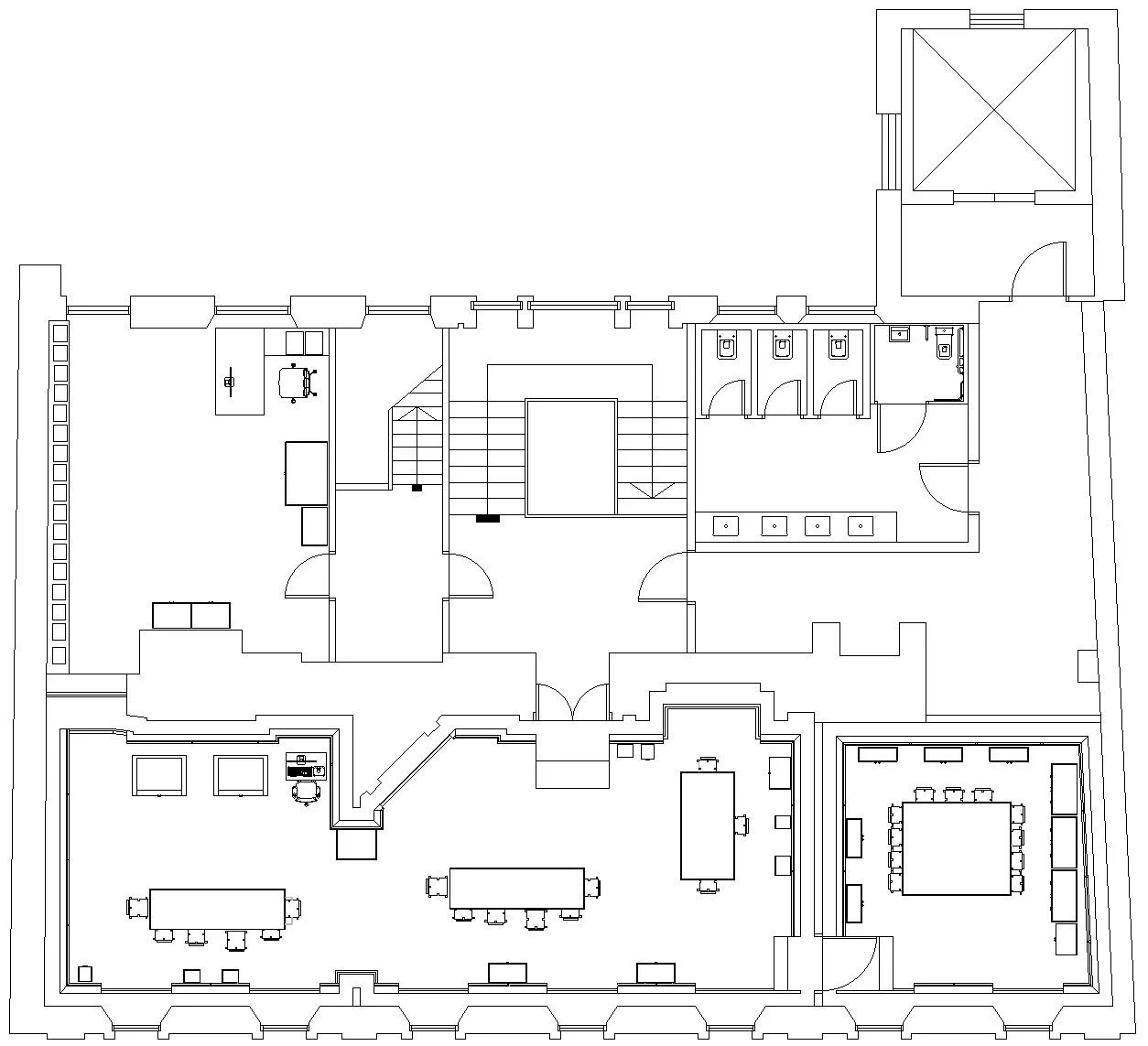
After the interim review, changes within the scheme were made to emphasise the learning and teaching of heritage crafts. Half of the third floor was removed to create a double height void space above the second floor workshop. This allowed for the development of the scheme, in terms of volumetrics, while also shining a light upon environmental and health and safety changes that will need modifying. Once the necessary changes were implemented it was time to think about the construction and technical details of the insertions.
Technical Work.
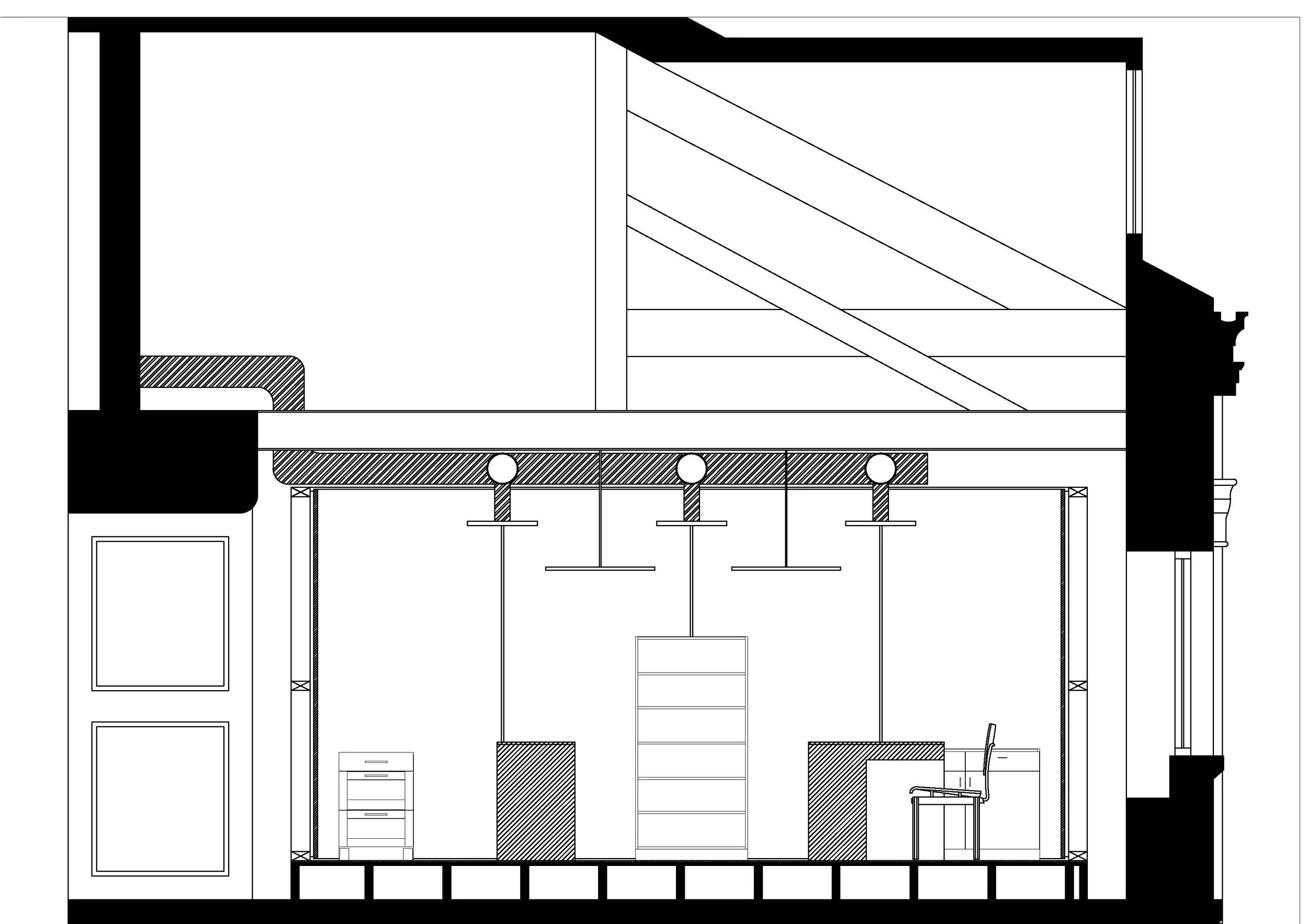
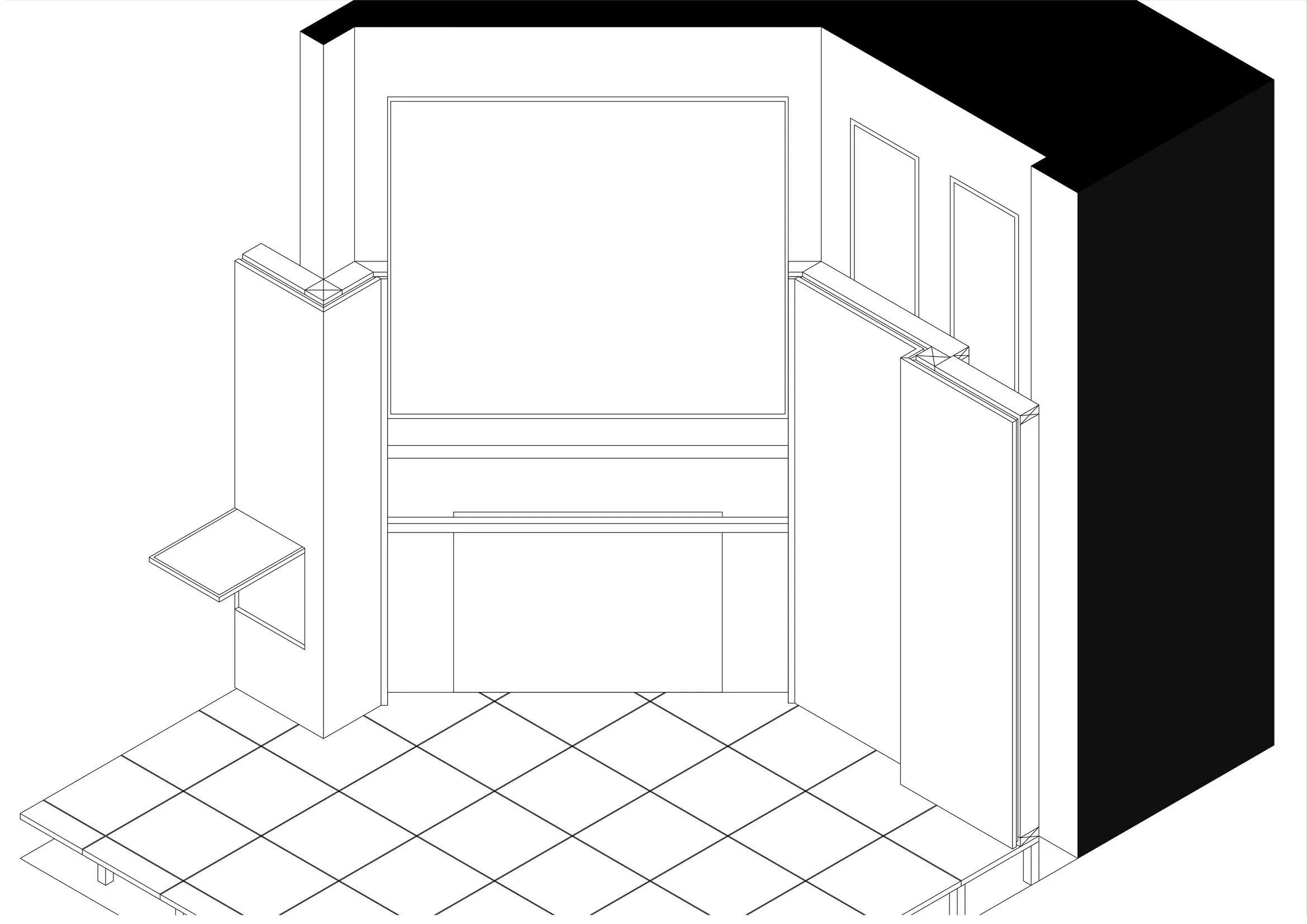
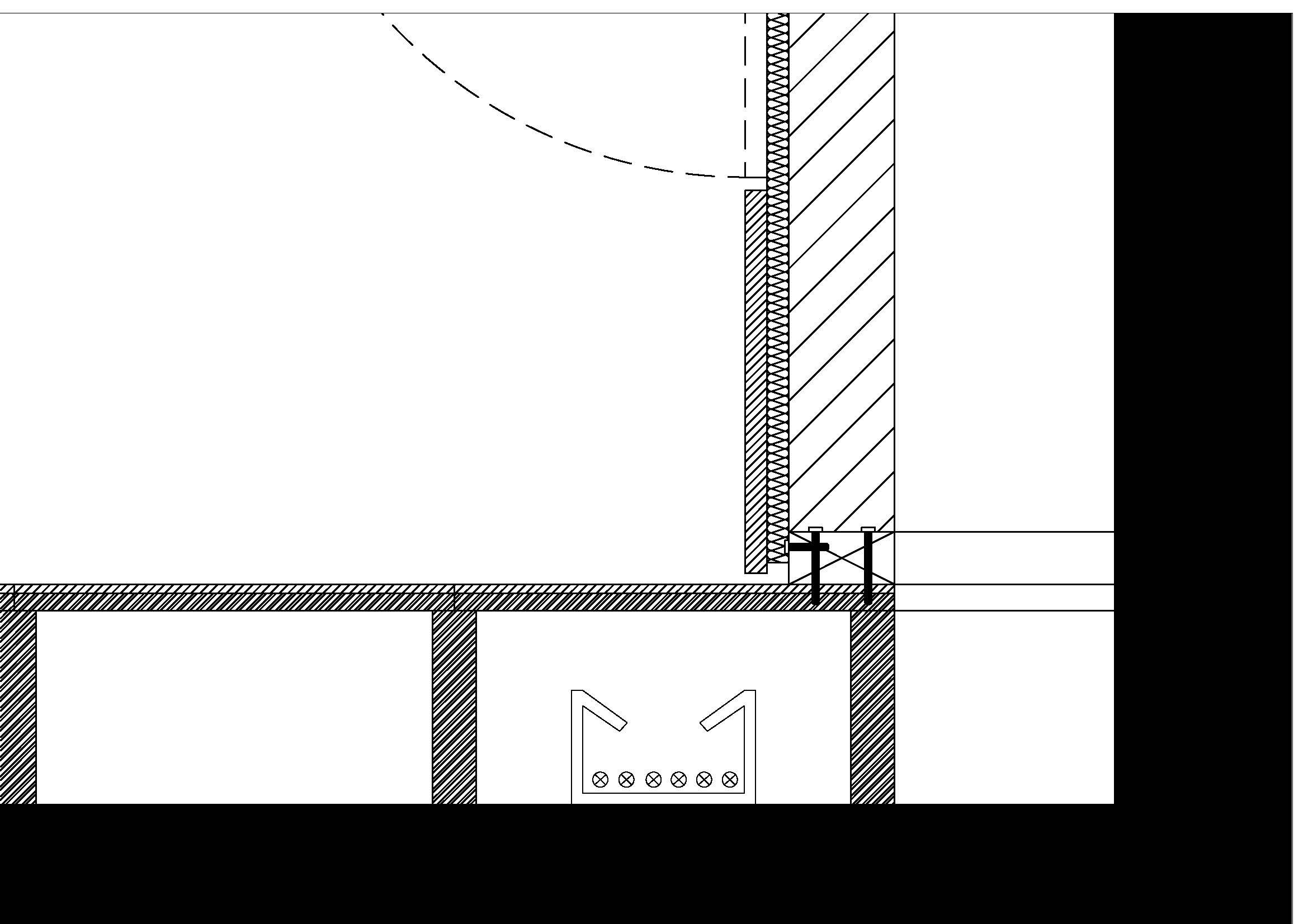
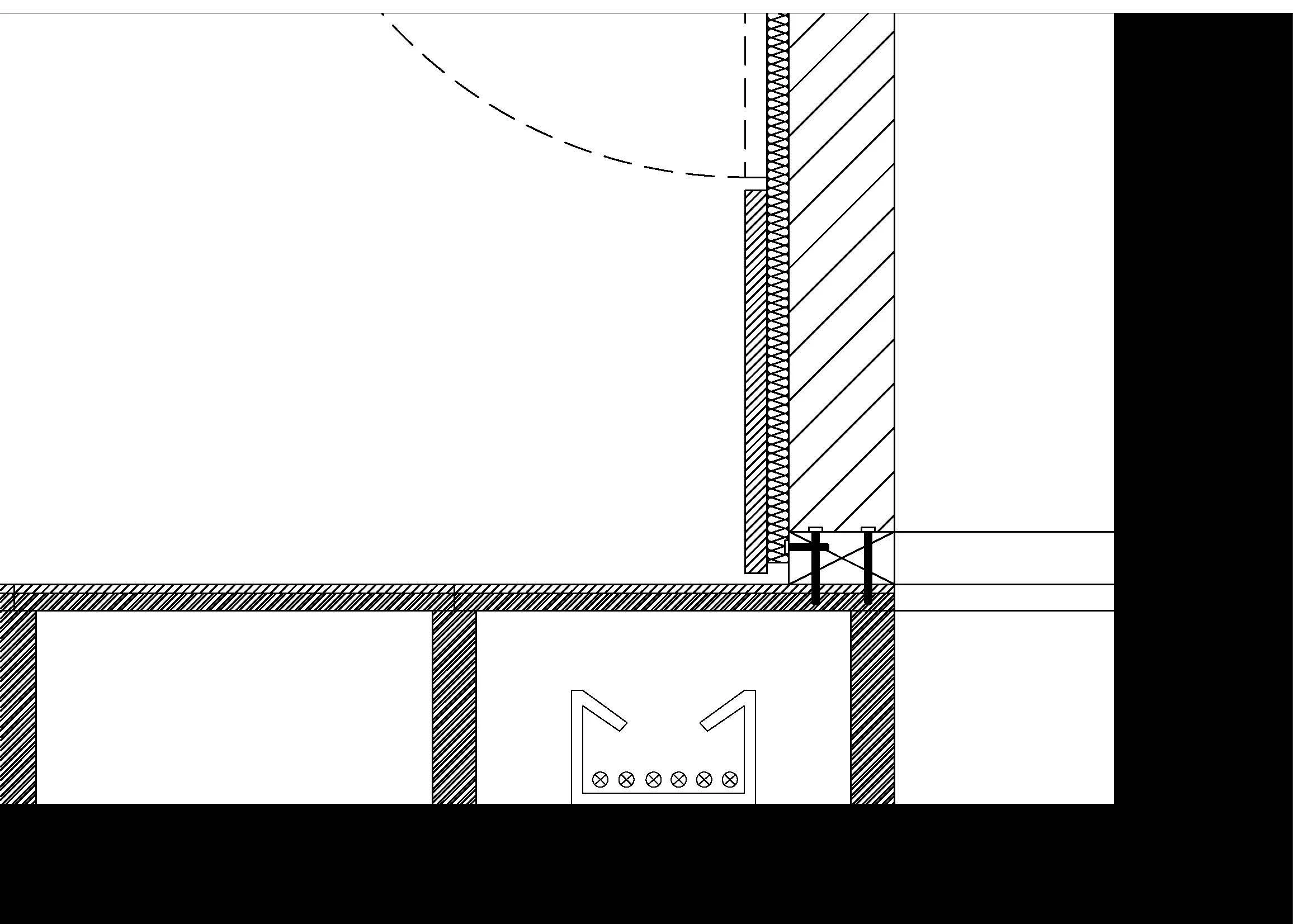
Once the development of the workshops were finalised, technical drawings of the first floor insertion were made to show the construction of the scheme. A 1-20 section, 1-10 axonometric and a 1-5 detail. The 1-5 shows the thicknesses in higher detail and hatching was used to show the materiality of the insertion. The 1-10 show the insertion from further out and shows where the 1-5 detail was taken from. Both the technical details and section help the client in understanding the technical features. Renders were made to assist in the visualisation of the space, along with the atmosphere within the insertion.
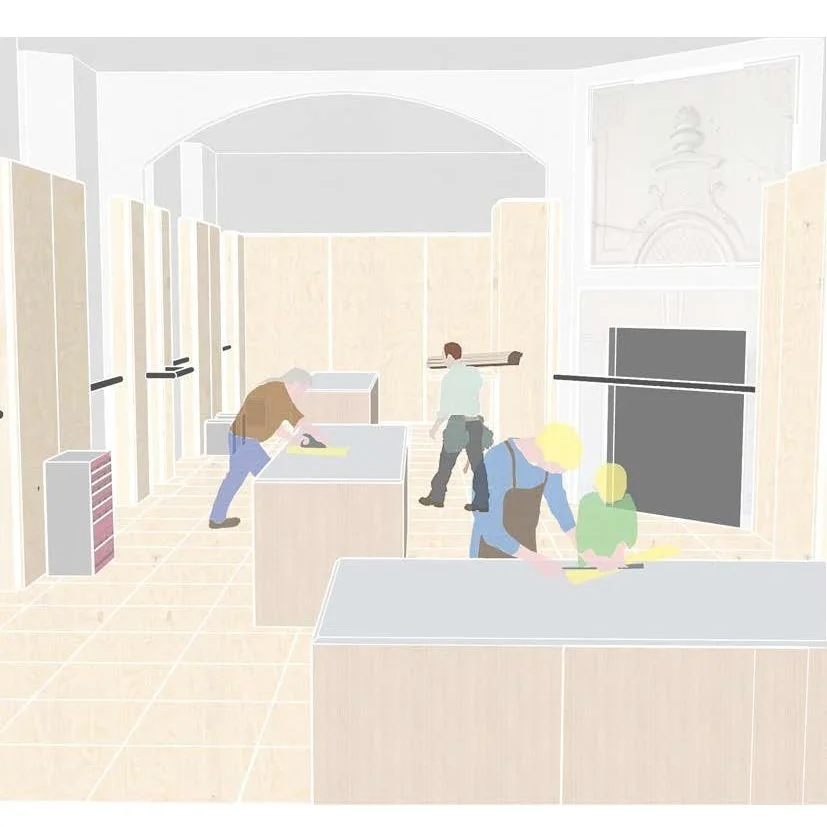
Renders.
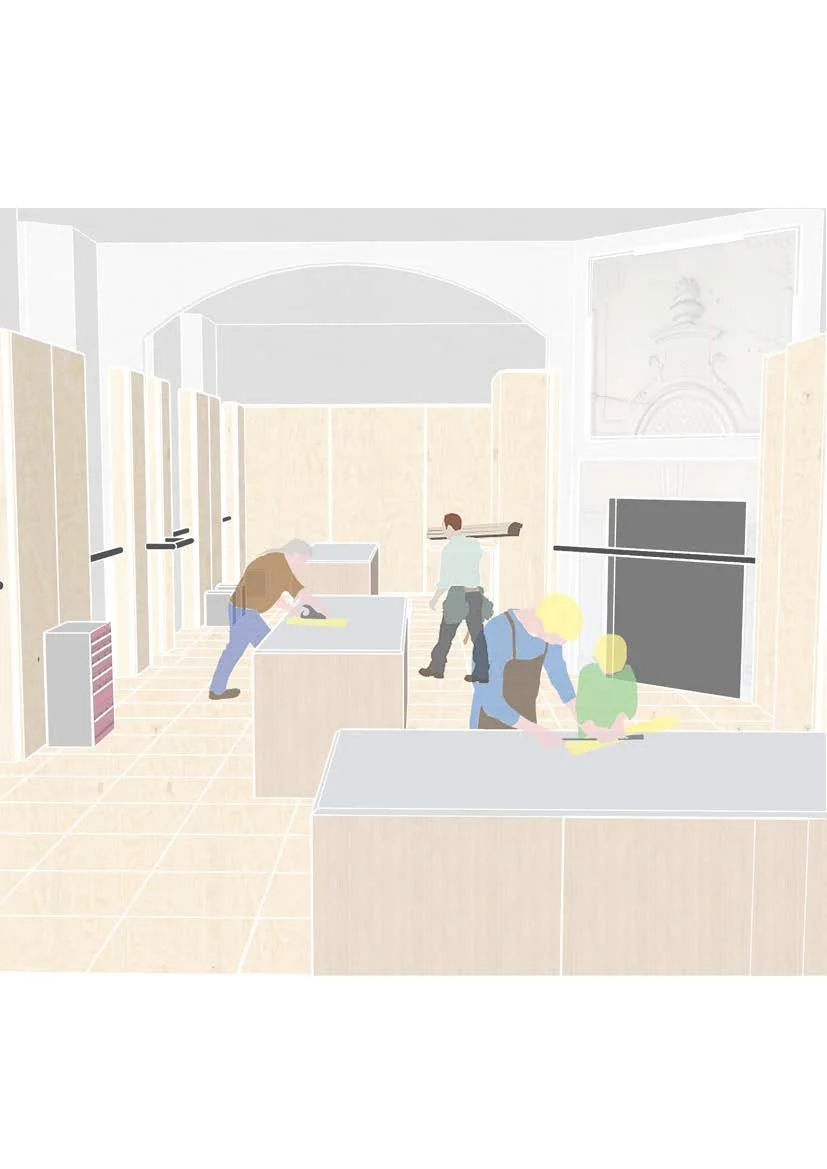
Renders of the workshop space were created to help convey the atmosphere of the individual spaces within the scheme. The renders also exhibit the insertion within the context of the pre-existing spaces. The materiality is also shown to allow the client to see how the materials impacts the space and scheme. The renders also shows the natural light entering the room and how it interacts with the space.
Final Renders.